There is a common pattern among people who train seriously for several years and then plateau. The technique is there. The conditioning is there. The knowledge of what to do is thorough and tested. But under real pressure — in hard sparring, in a grading, in a situation that actually matters — the technique that flows easily in relaxed practice becomes hesitant, mechanical, unreliable. The body knows what to do. Something else keeps getting in the way. That something is almost always the untrained mind, and the tradition's answer to it has always been the same: sit down, be still, and learn to get out of your own way.
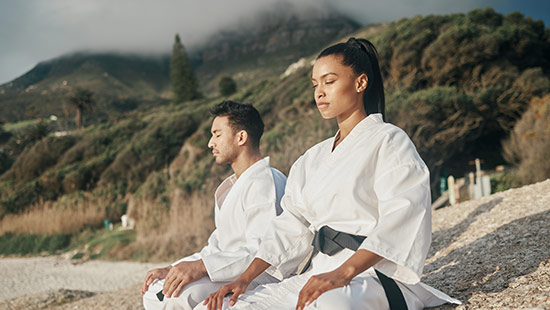
The Gap Between Technical Ability and Performance Under Pressure
Every serious martial arts tradition has arrived, independently and through different routes, at a version of the same insight: physical training alone is insufficient. The body can be conditioned to a high level of technical capability, but if the mind that directs it is reactive, easily overwhelmed, prone to freezing or to overthinking, then that capability will not be available when it is most needed. The internal curriculum — the meditation practice, the breath work, the cultivation of composure — is not supplementary to the physical training. It is what makes the physical training function under conditions that matter.
This is not a metaphysical claim. It is a practical observation that any experienced practitioner will recognise. The difference between a technique performed in a relaxed training environment and the same technique performed under genuine pressure is not primarily physical. The muscles know what to do. The nervous system has been trained. What degrades under pressure is the mental clarity to direct the body correctly without interference — and that clarity is a trainable capacity, developed through exactly the kind of deliberate, sustained practice that meditation provides.
As we explored in our article on breathwork and martial arts, the stress response narrows attention and degrades fine motor control. Meditation training is, in part, a long-term method of reducing the extent to which the stress response hijacks performance. Practitioners who have sat consistently for years develop a different relationship with pressure — not fearlessness, but a wider window of function before the system is overwhelmed.
Bodhidharma and the Shaolin Connection
The most well-known account of the relationship between meditation and martial arts in the Chinese tradition traces to the arrival of the Indian monk Bodhidharma at the Shaolin Temple in the fifth or sixth century. The historical accuracy of the story is debated, but its influence on the tradition is not. According to the account, Bodhidharma found the monks physically weak from long hours of seated study and unable to sustain the demanding meditation practice he brought with him. His response was to introduce a series of physical exercises — attributed by tradition as the origin of both Shaolin kung fu and the Yi Jin Jing, the muscle-tendon changing classic — that prepared the body for the rigours of intensive sitting practice.
Whether or not this history is literally accurate, it encodes an important truth about the relationship between physical and mental training in the Shaolin tradition: they were never meant to be separate. The physical practice prepared the body to sit. The sitting practice developed the mind that directed the body. The conditioning work and the meditation were two aspects of a single curriculum, each supporting and deepening the other.
This integration was carried into Japanese martial arts through the influence of Zen Buddhism, which entered Japan in the twelfth century and found an immediate resonance with the warrior class. The Zen emphasis on direct experience over conceptual knowledge, on the present moment over past or future, and on the cultivation of a mind that is clear, stable and unobstructed mapped directly onto the martial virtues that the bushido tradition was articulating in parallel. By the Edo period, the connection between Zen practice and martial arts was deeply established — expressed in texts like the Hagakure and Miyamoto Musashi's Book of Five Rings, which read as much as meditative philosophy as martial instruction.
Mushin — No Mind
Mushin — 無心, literally "no mind" — is the central concept of the internal curriculum in Japanese martial arts and one of the most frequently misunderstood terms in the tradition. It does not mean emptiness, passivity or a blank state. It describes a quality of mind in which action arises without the interference of conscious deliberation — where technique flows unobstructed because the mind is neither clinging to what just happened nor anticipating what might happen next, but fully and completely present to what is happening now.
The distinction from ordinary trained performance is subtle but important. A practitioner who has drilled a technique thousands of times can perform it competently in most circumstances. But if, in the moment of performance, the mind is occupied — assessing, judging, fearing, planning — there is a fractional delay, a moment of interference, that experienced practitioners can detect and exploit. Mushin eliminates that delay. The perception and the response are unified, and technique becomes truly reflexive rather than merely well-rehearsed.
Mushin is not a state that can be manufactured or forced. It is the natural outcome of sufficient training — both the physical drilling that internalises technique and the meditative practice that trains the mind to stop interrupting it. The traditional teaching is that you cannot try to achieve mushin because the trying itself is the obstacle. What you can do is remove the conditions that prevent it: the reactive thinking, the emotional turbulence, the habitual commentary that the untrained mind runs continuously. This is what the sitting practice is for.
Zanshin — The Remaining Mind
Where mushin describes the quality of mind in action, zanshin — 残心, "remaining mind" — describes the quality of awareness that persists after action. It is the sustained, open, relaxed alertness that does not collapse into tunnel vision, does not celebrate or mourn the last exchange, does not switch off when the immediate threat appears to have passed.
In practice, zanshin is visible in the way experienced practitioners carry themselves. They are present without being tense. They are aware of their environment without staring fixedly at any part of it. They are ready without being coiled. This is not a performance — it is the natural expression of a mind that has been trained to remain open and attentive rather than reactive and narrow.
The connection to everyday life is direct. The situational awareness we discussed in the context of psychological self-defence — the habit of noting exits, reading the emotional temperature of a space, maintaining peripheral awareness in unfamiliar environments — is a practical expression of zanshin. Experienced martial artists report that training develops this quality as a byproduct, independent of whether they ever consciously work on it. The sustained attention cultivated in thousands of hours of training changes how the mind relates to its environment outside the dojo as well as within it.
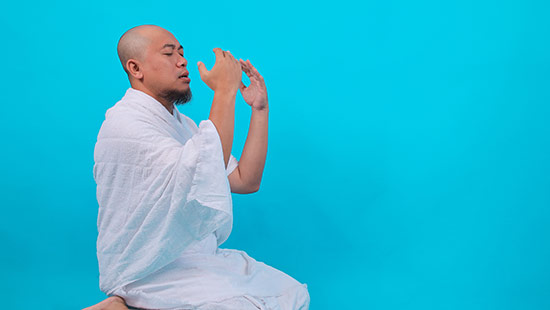
Two Practices Worth Starting With
Zazen — seated Zen meditation — is the practice most directly connected to the Japanese martial arts tradition. The physical form is simple: sit on a cushion or chair with the spine upright, the hands resting in the lap in a specific mudra, the eyes half-open and cast downward at a 45-degree angle. Breathe naturally. When the mind wanders — and it will, constantly, especially at first — notice that it has wandered and return attention to the breath or to the simple fact of sitting. That is the entire practice.
The simplicity is deceptive. Sitting still and doing nothing is one of the most demanding things the untrained mind is asked to do, and the resistance it generates in the first weeks — the restlessness, the boredom, the elaborate justifications for stopping — is itself part of what is being trained. The capacity to remain present with discomfort without reacting to it is exactly the capacity that transfers to training under pressure, and it is built in exactly the same way: by sitting with it, repeatedly, until the relationship with it changes.
Begin with five minutes. A single five-minute session practised every day produces more development over a month than a forty-minute session practised once a week. The nervous system learns through repetition and consistency, not through occasional intensity. As the ability to sustain attention develops — which happens gradually and without announcement — extend the period naturally. Most practitioners find that ten to twenty minutes daily is a sustainable and productive commitment over the long term.
Body scan meditation is a complementary practice particularly relevant for martial artists because of its direct development of proprioceptive awareness — the felt sense of the body's position, tension and movement that underpins good technique. Lie or sit comfortably and move attention systematically through the body from feet to head, noticing sensation in each area without trying to change anything. This is not relaxation work, though relaxation may result. It is an attention training practice that builds the internal map of the body that skilled movement requires.
For practitioners whose primary art is tai chi or qigong, Zhan Zhuang — standing post meditation — is a particularly direct complement to practice. Stand in a relaxed upright posture, feet shoulder-width apart, arms held slightly forward as if embracing a large tree, and simply remain in that position for a sustained period. The physical demands of standing post work — the leg endurance, the postural challenge, the management of discomfort over time — make it simultaneously a conditioning practice and a meditation. It is physically more demanding than seated practice, which is why many teachers use it to develop the mental qualities of sitting alongside the structural qualities of standing.
Integrating Meditation into Existing Training
The most effective approach to meditation for a martial arts practitioner is not to treat it as a separate activity bolted onto an already full training schedule. It is to find the points of integration where sitting practice and physical practice mutually reinforce each other.
Opening a training session with five minutes of seated or standing meditation — even just closing the eyes, settling the breath and allowing the mind to arrive in the present moment before beginning physical work — changes the quality of what follows. Students who do this consistently report that they are more attentive in training, pick up corrections more quickly, and retain technical improvements more reliably. The mind that arrives in the dojo already present and settled is a better student than the one that is still processing the day.
Closing a session with a short period of sitting serves a different but complementary function — it provides the nervous system with a clear signal that the training period has ended, supports the transition from sympathetic activation back to the parasympathetic rest-and-recovery state that the breathwork tradition addresses directly, and creates a moment of reflection that reinforces what was learned. Many traditional schools open and close with formal seated practice for exactly these reasons, even if the tradition behind the practice is not explicitly discussed.
The deeper integration is slower and less programmable. Over months and years of consistent practice, the qualities developed in sitting — the present-moment attention, the equanimity with discomfort, the reduction in reactive thinking — begin to appear in the physical training without being consciously imported. This is the process the tradition describes when it talks about mushin as something that cannot be forced but can be cultivated. It is not produced by a technique. It is the natural outcome of training both the body and the mind, consistently, over time.
Frequently Asked Questions
Meditation in the martial arts context is a training method for developing specific mental capacities — present-moment awareness, composure under pressure, the ability to observe and respond without reactive thinking. These are performance skills that directly affect how physical technique functions when the stakes are high. Every serious martial arts tradition has arrived at some form of meditative practice independently, which suggests it is addressing something real about the gap between technical ability and performance under pressure.
Mushin — literally "no mind" in Japanese — describes a mental state in which the practitioner acts without the interference of conscious deliberation. It is not emptiness or passivity but a quality of fluid, unobstructed responsiveness that arises when technique has been sufficiently internalised and the mind has been trained not to interrupt it. It is the goal of the internal curriculum in Japanese martial arts and the standard against which experienced practitioners measure their development.
Zanshin — "remaining mind" in Japanese — is the state of sustained, relaxed awareness that persists after an action or exchange. It is the opposite of tunnel vision or fixation. A practitioner with well-developed zanshin is fully present to their environment at all times — aware of what is in front of them, what is peripheral, what has changed. It is the meditative quality that connects directly to situational awareness in everyday life.
Zazen — seated Zen meditation — is the practice most directly connected to the Japanese martial arts tradition and the development of mushin and zanshin. A body scan practice is useful for developing the internal awareness that benefits both training and recovery. For practitioners whose primary art is tai chi or qigong, standing meditation — Zhan Zhuang — is particularly relevant. The best practice is the one that is actually done consistently.
Consistency matters more than duration. Ten minutes of genuine sitting practice daily produces more development over time than an hour once a week. Most teachers recommend beginning with five to ten minutes and extending the period gradually as the ability to sustain attention improves. The quality of attention brought to the practice is the determining factor, not the length of the session.
Related Articles
Breathwork and Martial Arts — How Breathing Shapes Performance and Resilience
Breath is the bridge between the physical and mental sides of martial arts training. How you breathe under pressure determines how well you think, how efficiently you move, and how quickly you recover.
Read Article
The Samurai Code — What Bushido Really Was and Why It Still Matters
The real story of bushido is stranger, more contested and considerably more interesting than the version that appears on gym walls and in martial arts manifestos.
Read Article