If there is a single thread connecting everything covered on this site — tai chi, martial arts, meditation, conditioning, self-defence — it is breath. Every tradition we write about has arrived, independently and through different routes, at the same understanding: how you breathe determines how you function under pressure, how quickly you recover, and how deeply you can develop the physical and mental capacities that serious practice demands. Breathwork is not a wellness trend. It is the oldest performance tool in every tradition that has ever taken the body seriously.
Why Breathwork Matters
The reason breathwork occupies such a central place in every serious movement and martial arts tradition is straightforward: breath is the only part of the autonomic nervous system you can consciously control. Heart rate, digestion, hormone release — these are not under voluntary direction. Breath is. And because breath directly influences all of these through the vagus nerve and the regulation of carbon dioxide and oxygen in the blood, it is the most direct lever available for shifting the body's state in real time.
When the stress response activates — in sparring, in a confrontation, in any high-pressure situation — breathing becomes fast and shallow, heart rate rises, fine motor control degrades and rational thinking narrows. This is the state that causes experienced practitioners to underperform and untrained people to freeze entirely. Deliberate slow breathing, particularly a longer exhale than inhale, directly counteracts this cascade. It is not a metaphor or a relaxation technique. It is a physiological intervention with measurable effects on heart rate variability, cortisol levels and cognitive function.
The practical implication is significant: the person who has trained their breath has access to a tool that works in any situation, requires no equipment and produces no side effects. That is an unusually strong case for any practice.
Who Breathwork Is For
Martial artists and fighters will find breathwork addresses the specific gap that most training programmes leave open — the space between what a practitioner can do when relaxed and what they can do under genuine pressure. Sparring acclimatises the brain to physical threat, as we discussed in our martial arts guide, but breathwork develops the regulatory capacity that keeps technique available when the stress response is active. The two practices together produce something neither does alone.
Older adults managing stress, sleep difficulties or anxiety will find in breathwork one of the most accessible and evidence-supported interventions available. No class, no equipment and no prior experience are required. Five minutes of deliberate breathing practice before bed, practised consistently, produces measurable improvements in sleep quality and stress markers within weeks. Combined with tai chi, which integrates breath with movement from the first session, it covers both the static and dynamic dimensions of breath training.
People dealing with anxiety who want a practical tool rather than a conceptual framework will find breathwork delivers exactly that. The physiological mechanism — parasympathetic activation through the vagal pathway — is well understood and the effect is immediate. Learning to use it reliably under pressure takes practice, but the learning curve is short and the first results arrive quickly.
Anyone who trains seriously and wants to recover better between sessions will find that breath regulation is one of the most underused recovery tools available. The transition from sympathetic activation — the training state — back to the parasympathetic rest-and-recovery state is accelerated significantly by deliberate post-training breathing work. Most practitioners who adopt this report noticeable improvements in recovery quality within a few weeks.
Complete beginners with no movement background often find breathwork to be the most accessible starting point of anything on this site — because the barrier is genuinely zero. No fitness required, no coordination required, no equipment needed. Lie down, breathe deliberately, notice what changes. The simplicity is not a limitation; it is the point.
How Different Traditions Approach Breath
One of the most striking things about breathwork as a subject is how independently different traditions arrived at the same fundamental understanding. The specific techniques differ, the terminology differs, and the cultural framing differs — but the underlying insight is consistent across traditions separated by centuries and continents.
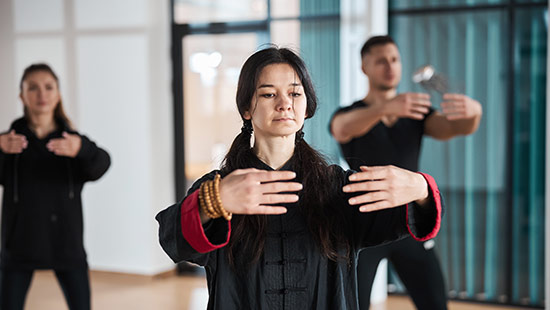
In tai chi and qigong, breath is integrated into every movement of the form — expanding movements coordinated with the inhale, contracting movements with the exhale, and the whole practice oriented around cultivating qi through the dan tian, the energy centre below the navel. The breath awareness that tai chi develops over months of regular practice is one of its most transferable gifts, producing improvements in stress and sleep that practitioners often notice before they have learned a complete form.
In karate, the kiai — the sharp exhalation that accompanies a strike — is the most visible expression of breath in the striking arts. Done correctly, it is not a shout but the audible result of a complete explosive exhale that tenses the core, maximises force transfer and simultaneously resets the breath for the next movement. Kata also contain specific breathing patterns that encode the internal curriculum of the art alongside the physical technique.
In Zen-influenced martial arts — aikido, kendo, the Japanese budo traditions — breath is inseparable from the concept of ki, the Japanese equivalent of qi. Kokyu, or breath power, in aikido describes the integration of breath, timing and whole-body movement into a unified expression. The seated meditation that opens and closes training in many traditional schools is simultaneously a breath practice — the two are not distinguished.
In Shaolin conditioning, the iron body tradition explicitly integrates breath with impact training — the coordination of exhale with contact is both a safety mechanism and a method of directing internal force through the conditioned tissue. Breath is not supplementary to the conditioning work; it is the mechanism through which the external practice connects to the internal one.
Three Techniques Worth Starting With
These are the three techniques covered in depth in our breathwork and martial arts article. Brief descriptions are given here — go to the full article for the detail on mechanism, timing and how to build each one into existing practice.
Diaphragmatic breathing is the foundation of everything else. Most adults breathe primarily from the chest, which is shallow, inefficient and associated with elevated baseline stress. Diaphragmatic breathing — belly rises first on the inhale, chest barely moves — is how the body breathes naturally in deep sleep. Relearning it as a deliberate practice is the single most valuable thing most people can do with five minutes a day.
Box breathing is the technique most widely used in combat sports and military contexts for rapid recovery of composure under pressure. Inhale for four counts, hold for four, exhale for four, hold for four. The equal-ratio structure interrupts the shallow rapid pattern of the stress response and gives the nervous system time to shift state. It can be used before training, between rounds, or in any situation where pressure is rising and clear thinking is required.
Extended exhale breathing is the simplest and most immediately effective of the three. Inhale for four counts, exhale for six to eight. The extended exhale is the most direct trigger for the vagal response — because heart rate decreases on the exhale, deliberately lengthening it produces a faster and more pronounced calming effect than equal-ratio patterns. This is the technique most easily used in real time, in any situation where the body is moving toward the stress response and you want to redirect it.
Getting Started
Unlike almost every other practice covered on this site, breathwork requires nothing to begin. No class, no equipment, no teacher, no prior experience. The techniques described above can be learned and practised independently from the first attempt, and the initial results — a noticeable shift in how the body feels within a few minutes of deliberate practice — arrive quickly enough to be immediately motivating.
The most effective approach for most people is to attach a short breathwork practice to something they already do consistently. Five minutes of diaphragmatic breathing before sleep. Box breathing in the car before a stressful meeting. Extended exhale work in the changing room before a training session. The consistency of the context matters more than the duration of the practice — the nervous system learns through repetition, and a short practice performed daily produces more lasting change than an occasional longer one.
If you train in a martial art or movement practice, the most valuable next step is to bring deliberate breath awareness into your existing training. Notice where you hold your breath. Notice what happens to your technique when you exhale on effort. Notice the relationship between your composure in sparring and the quality of your breathing in those moments. The feedback is immediate and consistent once you know what to look for.
Breathwork Articles
Breathwork and Martial Arts — How Breathing Shapes Performance and Resilience
The full guide — what controlled breathing does under pressure, how different traditions approach it, and three techniques to begin with today.
Read Article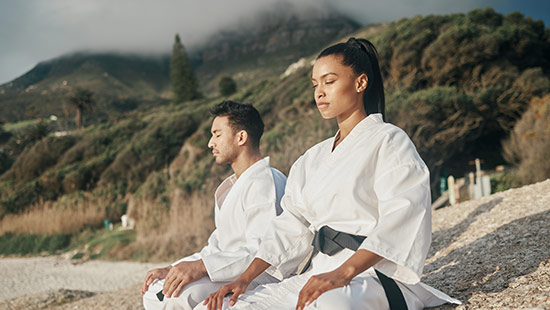
Meditation for Martial Artists — Focus, Discipline and the Quiet Mind
Where breathwork addresses immediate regulation, meditation develops the longer-term mental qualities that make physical training work under pressure.
Read Article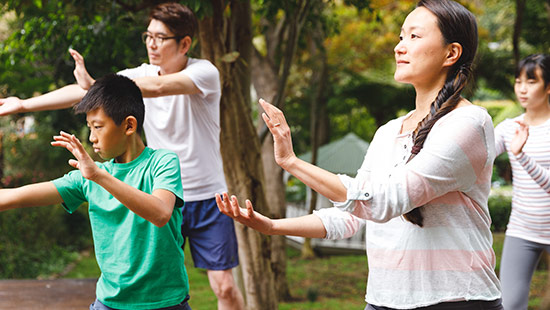
What Is Tai Chi — A Beginner's Guide to the Art and Its Benefits
Tai chi integrates breath with movement from the first session — making it one of the most complete entry points into breathwork for people who prefer to move than to sit still.
Read Article
Qigong vs Tai Chi — What Is the Difference and Which Is Right for You
Both practices are built around breath and internal energy cultivation. This guide explains how they differ and helps you choose the right starting point.
Read ArticleFrequently Asked Questions
Yes. A growing body of research supports breathwork as an effective intervention for anxiety and stress. Slow, deliberate breathing — particularly with a longer exhale than inhale — activates the parasympathetic nervous system, which governs the body's rest and recovery state. This physiological shift reduces heart rate, lowers cortisol and counteracts the physical symptoms of anxiety. The effect is immediate and accumulates with regular practice over time.
Regular breathwork practice is consistently associated with improved sleep quality. The parasympathetic activation produced by slow breathing creates the physiological conditions the body needs to transition into sleep. A short extended-exhale breathing practice before bed — inhaling for four counts and exhaling for six to eight — is one of the simplest and most effective sleep preparation techniques available.
Breathwork involves the deliberate manipulation of breathing patterns to produce specific physiological and psychological effects. Meditation may use the breath as an anchor for attention without actively controlling it. In martial arts traditions, both are used — breathwork for immediate regulation under stress, meditation for the longer-term development of composure and focus. They are complementary rather than interchangeable.
Even five minutes of deliberate breathing practice daily produces measurable changes in nervous system regulation over time. Consistency matters far more than duration. A short daily practice — five to ten minutes of diaphragmatic breathing or box breathing — is more valuable than occasional longer sessions. Most people find that building a short breathwork practice into an existing routine, such as before training or before sleep, is the most sustainable approach.
The gentle techniques covered here — diaphragmatic breathing, box breathing and extended exhale breathing — are safe for the vast majority of people. More intensive breathwork practices such as hyperventilation-based methods are not covered here and should only be undertaken with qualified instruction. If you are managing a cardiovascular condition, respiratory condition or anxiety disorder, it is worth speaking to your GP before beginning any new breathing practice.