The word bushido gets used a great deal, and understood rather less. It appears on gym walls, in martial arts manifestos, in motivational content, and in the names of countless academies and dojos worldwide. Most of these uses share a common version of what bushido means — honour, sacrifice, the warrior's unyielding spirit. That version is not wrong exactly. But it is incomplete, and in some ways it is more invention than history. The real story of bushido is stranger, more contested and considerably more interesting.
The Myth and the History
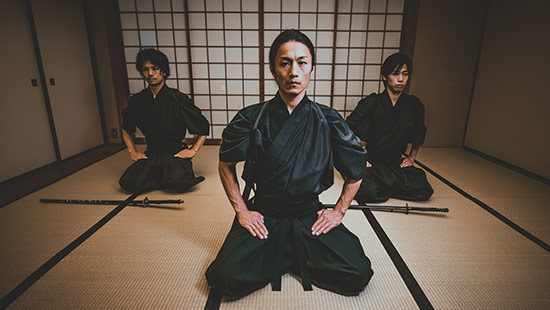
The first thing to understand about bushido is that the samurai themselves did not call it that, at least not in the way we use the term today. The word bushido — 武士道, literally "the way of the warrior" — appears in Japanese texts as far back as the early seventeenth century, but as a unified ethical code governing samurai behaviour, it is largely a product of a much later period.
The samurai class existed in Japan for roughly seven centuries, from the late Heian period through to the Meiji Restoration of 1868, when the feudal system was dismantled and the samurai as a legally distinct class ceased to exist. During those centuries, samurai behaviour was shaped by a complex mixture of Confucian ethics, Zen Buddhist practice, Shinto reverence, feudal obligation, and the practical demands of military life. There was no single code that all samurai followed, and samurai behaviour across different periods and domains varied considerably — including behaviour that the romanticised version of bushido would not recognise as honourable at all.
The version of bushido that most people know — the seven virtues, the unified philosophical framework, the soul of Japan — was codified retrospectively and most influentially by a single book: Bushido: The Soul of Japan, written not by a samurai but by a Christian educator named Nitobe Inazo and published in English in 1900. Nitobe wrote the book to explain Japanese culture to a western audience, and he drew on his knowledge of samurai history, Confucian and Buddhist thought, and — perhaps more than is sometimes acknowledged — western chivalric tradition, to construct a coherent ethical framework that did not quite exist in the form he described.
This is not a criticism of Nitobe or of bushido. It is simply the history. Ethical codes are always constructions, always interpretations, always shaped by the purposes of those who articulate them. What matters is whether the principles themselves are sound and whether they have proven useful to the people who have adopted them. In the case of bushido, the answer to both questions is yes — which is why the code has survived and spread far beyond the world that produced it.
The Seven Virtues — What They Actually Mean
Nitobe's articulation of the seven virtues of bushido has become the standard reference point for the tradition, and it is worth examining each one seriously rather than treating them as a decorative list.
Gi — Rectitude or Justice. This is often described as the most fundamental of the seven virtues. It refers not just to following rules but to the capacity for moral clarity — knowing what is right and acting on it without equivocation. For a warrior, this meant making difficult decisions cleanly. In modern life, it means the same thing: the willingness to act rightly even when it is inconvenient, unpopular or personally costly.
Yu — Courage. Nitobe was careful to distinguish courage from recklessness. True courage, in the bushido tradition, is not the absence of fear but the decision to act correctly despite it. This distinction matters — the samurai tradition did not admire those who felt no fear, but those who felt it and acted anyway. It is a more honest and more useful model of courage than the invulnerable warrior of popular imagination.
Jin — Benevolence or Compassion. This is perhaps the virtue most at odds with the Hollywood image of the samurai as a cold instrument of violence. Benevolence — the active care for others, the use of power in service of those who have less of it — was considered essential to the warrior's character. Power without compassion was regarded as mere brutality. The capacity for violence, in the bushido tradition, was only honourable when held by someone with the character to restrain it.
Rei — Respect or Courtesy. The formal courtesy of Japanese culture — the bowing, the precise social protocols, the careful attention to how one addresses and treats others — has deep roots in this principle. For the samurai, courtesy was not merely social decoration. It was a form of moral seriousness, a recognition of the dignity of others, and a discipline in itself. The dojo bow that opens and closes every training session in virtually every martial art is a direct descendant of this principle.
Makoto — Honesty or Sincerity. A samurai's word was considered binding in a way that made written contracts unnecessary. This was not naivety — it was a cultivated standard of personal integrity, maintained because the alternative, a culture in which words could not be trusted, was incompatible with the kind of loyalty and cooperation on which the samurai social order depended. The same principle applies to any group — family, team, school — that requires genuine trust to function.
Meiyo — Honour. Honour in the bushido sense is not reputation — it is not what others think of you. It is the internal standard against which you measure your own actions, the thing you answer to when no one else is watching. The samurai's concern with honour was ultimately a concern with integrity: the alignment between internal values and external conduct. This is why dishonourable conduct was considered more damaging than death — it was a corruption of the self, not merely a social embarrassment.
Chugi — Loyalty. Loyalty to lord, family and comrades was the structural virtue that held the samurai social order together. Without it, the other virtues floated free of any practical context. In the modern world, the object of loyalty has changed — we are less likely to owe allegiance to a feudal lord — but the principle of deep, unconditional commitment to those we have chosen to stand with remains one of the most powerful forces in human social life.
How Bushido Shaped Modern Martial Arts
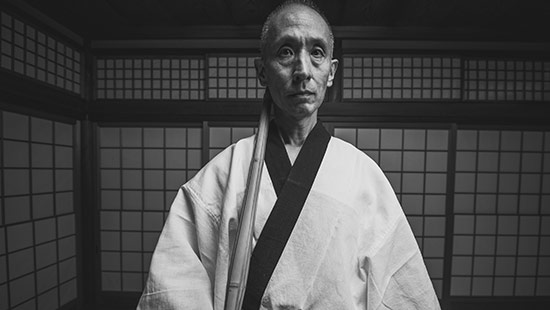
The Meiji Restoration of 1868 ended the samurai class but did not end the influence of samurai culture. If anything, the decade following the Restoration saw an intensified effort to preserve and systematise what the samurai tradition had produced — and it was in this period that many of the martial arts most widely practised today took their modern form.
Jigoro Kano founded judo in 1882, explicitly constructing it as an educational system as much as a fighting art. His two foundational principles — jita kyoei (mutual benefit) and seiryoku zenyo (maximum efficiency, minimum effort) — are philosophical principles in the bushido tradition as much as they are technical ones. Kano wanted judo to develop character, not just physical skill, and his curriculum reflected that. The randori (free practice) system he developed was designed to teach students how to handle pressure, failure and uncertainty — exactly the qualities that bushido had always placed at the centre of the warrior's education.
Gichin Funakoshi, who brought karate from Okinawa to mainland Japan in the 1920s and is regarded as the father of modern karate, articulated twenty precepts of practice that are saturated with bushido influence. His most famous statement — karate ni sente nashi, "there is no first attack in karate" — encapsulates the bushido principle that martial skill is a tool of last resort, not a first response. The strong relationship between physical training and ethical formation that Funakoshi insisted upon is a direct continuation of the samurai tradition.
Morihei Ueshiba, who developed aikido in the early twentieth century, went further still. Ueshiba described aikido explicitly as a martial art of love — a system in which the goal was not to defeat an opponent but to neutralise aggression without causing harm. This may seem far removed from the battlefield traditions of the samurai, but it is in fact a logical extension of the bushido principle that benevolence and restraint are the hallmarks of a genuinely capable warrior.
What Survives in the Dojo Today
Walk into any serious martial arts school — judo, karate, aikido, jujutsu, kendo — and you will find bushido operating in the culture even if the word is never spoken. The bow at the entrance to the training space. The respect shown to senior practitioners. The expectation that training is approached with seriousness and that technique is pursued for its own sake rather than for external reward. The understanding that how you train is an expression of who you are, not merely a means to an end.
These are not decorative traditions. They are a living inheritance from a culture that understood, through hard experience, that the development of physical capability without ethical formation is dangerous, and that the two must be cultivated together. Every serious martial arts tradition in the world has arrived at a version of this understanding independently, which suggests it is pointing at something real about human nature rather than at a cultural peculiarity.
Bushido is not a historical curiosity. It is a set of principles that have been tested across centuries, refined through practice, and transmitted through the disciplines that carry them forward. Whether you encounter them on a training mat, in a philosophy text, or in the conduct of someone you respect and want to emulate, the principles themselves — integrity, courage, compassion, discipline, loyalty — remain as demanding and as worthwhile as they have always been.
Frequently Asked Questions
Bushido — literally "the way of the warrior" — is the ethical and philosophical code associated with the Japanese samurai class. It encompasses principles including rectitude, courage, benevolence, respect, honesty, honour and loyalty. The code was not formally written during the samurai era itself but was codified retrospectively, most influentially by Nitobe Inazo in his 1900 book Bushido: The Soul of Japan.
The historical reality is more complex than popular culture suggests. Samurai behaviour varied enormously across different periods and domains. The idealised code of bushido as a unified, consistently followed system is largely a retrospective construction, particularly from the Meiji era. Individual samurai certainly held strong values around duty, loyalty and martial skill, but the notion of a universal, consistently observed code is substantially mythologised.
The seven virtues most commonly associated with bushido are: gi (rectitude or justice), yu (courage), jin (benevolence or compassion), rei (respect or courtesy), makoto (honesty or sincerity), meiyo (honour or glory), and chugi (loyalty). These were articulated in their most widely known form by Nitobe Inazo in 1900 and have been adopted as foundational principles by many modern martial arts traditions.
The founders of judo, karate and aikido all explicitly drew on bushido principles in shaping their arts. Jigoro Kano built judo around mutual benefit and maximum efficiency. Gichin Funakoshi articulated twenty principles of karate practice deeply influenced by the bushido tradition. Morihei Ueshiba described aikido as a martial art of love — a direct extension of the bushido principle that true capability is expressed through restraint, not aggression.
The core principles of bushido — integrity, discipline, respect, the willingness to act under pressure — are as applicable to modern life as they were to the warriors who first articulated them. They survive not as historical curiosities but as active values in martial arts dojo culture worldwide, and in the broader conversation about what it means to live and act with purpose and integrity.
Related Articles

Psychological Self-Defence — The Mental Side of Personal Protection
The most dangerous moment in any confrontation is the one before it becomes physical. Awareness, ego management and the decision to walk away are the foundations trained practitioners build first.
Read Article
Meditation for Martial Artists — Focus, Discipline and the Quiet Mind
In every serious martial arts tradition, mental training sits alongside physical training. This guide covers the meditation practices that have shaped the discipline for centuries.
Read Article