Ireland has a strong and varied offering of martial arts and movement classes for children, covering everything from traditional karate and judo to kids kickboxing, Brazilian jiu-jitsu, MMA and ninja obstacle training. The challenge for parents is less about finding something and more about finding the right thing — the format that matches what your child needs, taught by an instructor who knows how to work with children. This guide covers what is available, what each style offers, the self-defence dimension, and how to evaluate any class before committing.
Why Martial Arts and Movement Training for Kids
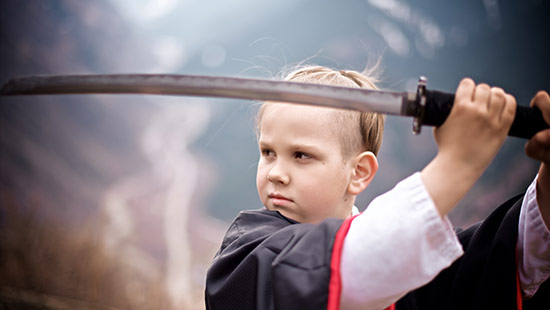
The benefits of martial arts training for children are well-documented and consistently reported by parents and teachers — improved focus, better self-regulation, increased confidence, stronger physical coordination and the ability to persist through difficulty without giving up. These are not incidental byproducts. They are direct outcomes of the training format: individual challenge within a structured group setting, clear incremental goals, immediate physical feedback, and a culture that takes effort and character as seriously as technique.
What distinguishes martial arts from most other children's activities is that the challenge is always personal. The child is not competing against a teammate, is not benched if they are having an off day, and is not measured against a fixed standard that either fits them or does not. The measure is always their own previous attempt. That shift — from external comparison to internal progress — is the mechanism behind much of the confidence development that parents notice.
The physical benefits are equally real. Grip strength, core stability, coordination, spatial awareness, balance and body confidence all develop through training in ways that carry over to every other sport and physical activity a child might pursue. Children who train consistently tend to move better, fall better and recover from physical setbacks more quickly — because their relationship with their own body has been trained alongside everything else.
What Is Available in Ireland
Karate remains the most widely available martial art for children across Ireland. Its structured belt system gives children clear goals and visible milestones, the training is age-appropriate from as young as four or five, and the curriculum — kata, basic technique, partner drills — develops discipline and attention in a format that children generally respond well to. Most towns and many villages have a karate club, making it the most accessible starting point for families outside major urban centres.
Judo has a particularly strong children's programme in Ireland through the Irish Judo Association. It teaches throwing, falling and ground control in a contact format that is safer than it looks — the emphasis on learning to fall correctly makes it one of the most injury-aware martial arts for children. Judo develops real physical confidence and whole-body coordination, and its Olympic status gives motivated children a clear competitive pathway if they want one.
Taekwondo is popular with children for its dynamic kicking techniques and its clear competition structure. It suits children who enjoy the performance and competition dimension of martial arts. Clubs are available through most of Ireland, and the belt system gives children regular progression goals. The emphasis on kicking develops leg strength, flexibility and coordination that transfers well to other sports.
Kids kickboxing is widely available across Ireland and is often the first martial art children try. Classes combine striking technique with fitness work in a format that is energetic, varied and immediately engaging. It is particularly good for children who need to burn energy productively and who respond to the direct cause-and-effect of striking training. Many clubs offer non-contact or light-contact formats for younger children, with contact levels increasing appropriately as they develop.
Kids MMA classes are growing significantly in Ireland, particularly in urban areas. Children's MMA programmes typically teach the component disciplines — striking, wrestling, grappling — in an age-appropriate format without full-contact sparring for younger groups. The broad range of skills developed makes it an excellent foundation for children who may later want to specialise, and the culture around MMA gyms in Ireland tends to be inclusive and supportive of beginners.
Brazilian jiu-jitsu (BJJ) for children develops problem-solving, composure and the ability to stay calm under physical pressure. Rolling — live grappling practice against a resisting partner — teaches children to manage their emotions when things are not going their way, which has genuine transferable value. BJJ clubs have a notably welcoming culture and the absence of striking makes it a good option for parents who are uncertain about contact sports.
Ninja training takes a different approach entirely — obstacle-based movement work that develops climbing, jumping, swinging, balance and coordination in a format that feels like play rather than exercise. It suits children who find the formality of traditional martial arts difficult, and it is one of the best entry points for children who are not naturally sporty but who need to develop physical confidence and body awareness. Many martial arts schools incorporate ninja-style training into their children's programmes even without advertising it specifically. We cover this in detail in our guide to ninja training for kids.
Self-Defence for Kids — What It Actually Means
Self-defence for children is one of the most searched topics in this space and one of the most misunderstood. Parents understandably want their children to be safe, and the instinct is to find something that teaches specific physical responses to specific threats. The reality of how self-defence works for children — and for adults — is rather different.
The most important self-defence skills for a child are not physical techniques. They are awareness, boundary-setting, the confidence to speak up in an uncomfortable situation, and the emotional regulation to respond calmly rather than freezing. A child who has trained consistently in any martial art develops all of these as byproducts of the training itself — through learning to read a partner's movement, through managing the frustration of not immediately succeeding, through the physical confidence that comes from knowing what their body can do.
The physical dimension matters too, but in a more general way than specific technique training suggests. A child who has trained in kickboxing or judo or BJJ has been in physical contact with resisting partners many times. They have managed discomfort, stayed present under pressure, and their body has experience of being pushed and pushing back. This is fundamentally different from a child who has memorised a sequence of responses to a grabbing attack but has never trained those responses under any kind of realistic pressure.
For parents specifically looking for self-defence classes for kids, a good children's programme at a reputable kickboxing, judo or BJJ club will develop more genuine self-protection capability than a dedicated self-defence course — because the consistent training develops the underlying physical and psychological capacities rather than just the surface-level techniques. As we explored in our article on psychological self-defence, the mental foundations of personal safety are built through training, not through instruction alone.
Choosing the Right Format for Your Child
There is no single best martial art for children, and the right choice often has less to do with the style itself than with the instructor, the culture of the club and whether the format matches your child's personality.
Children who are drawn to structure, progression and clear goals tend to do well in traditional martial arts — karate, taekwondo, judo — where the belt system provides visible milestones and the curriculum is consistent and clearly organised. Children who find formality difficult, who need more movement variety or who are not naturally competitive often respond better to kickboxing, BJJ or ninja training, where the format is less rigid and the challenge more immediately physical.
Age matters too. Younger children — under seven or eight — generally do best in formats that prioritise movement, play and short bursts of structured activity over technical drilling. Most good children's martial arts instructors understand this and pitch their early sessions accordingly. For older children and teenagers, the format can be more demanding, and many teenagers find that training alongside adults in a junior-friendly adult class is more engaging than a children's class that feels too easy.
If your child is uncertain or has had a difficult experience with team sports, a trial class in almost any of the formats above is a low-risk way to find out whether they connect with the environment. Most good clubs offer trial sessions, and a child who is reluctant at the door is often the one most absorbed in the class twenty minutes later.
What to Look for in a Children's Class
Instructor qualifications and safeguarding. Anyone teaching children should have garda vetting as a minimum, alongside a relevant safeguarding or child protection qualification. Ask directly about both before your child attends. A good instructor will welcome the question.
Class size. Small classes matter significantly for children. A class of six to ten children per instructor allows individual coaching and means the instructor can notice when a child is struggling before the difficulty becomes a problem. Large classes are energetic and can be enjoyable, but they limit the quality of instruction a child receives.
Visit and watch a group class first. Any reputable club will welcome you to observe a regular group session before your child joins. Watch how the instructor manages the group — how they respond to a child who is finding something difficult, how they maintain discipline without harshness, whether children of different abilities are equally supported. A well-run children's class is noticeably different from a poorly run one, and watching tells you things no review can.
Take a trial session before committing. Most clubs offer a trial class. Take it. Pay for one or two sessions before committing to a term or a membership. The first session where your child is participating rather than watching gives you and them a much clearer picture of whether the environment is right.
Check the instructor's background online. A reputable club will have instructor information on its website — training background, experience with children, relevant qualifications. If there is no information about the people teaching, ask for it directly before attending.
Culture and atmosphere. The culture of a children's martial arts class matters as much as the curriculum. A good class celebrates effort and improvement, not just achievement. Children who are struggling are supported, not highlighted. The atmosphere is encouraging rather than competitive. These things are visible from the door.
Kids Training Articles
Ninja Training for Kids — What It Is and Why It Builds Confidence
Obstacle-based movement training in a format that feels like play — what it involves, the physical and confidence benefits, and how to find a class or event in Ireland.
Read Article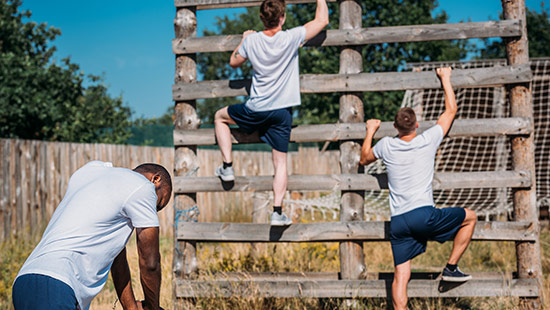
Obstacle Course Racing Ireland — Beginner's Guide and 2026 Events
For older children, OCR events are a natural progression from ninja training — family and junior categories are available at most Irish events, including the OCR World Championships in Limerick in August 2026.
Read Article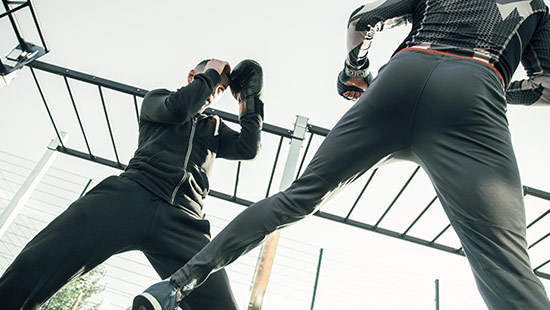
Psychological Self-Defence — The Mental Side of Personal Protection
The most important self-defence skills are mental, not physical. Awareness, boundary-setting and composure under pressure — how they develop through training, and why they matter.
Read Article
Martial Arts in Ireland — Styles, Classes and How to Find a Good Club
The full guide to martial arts styles available in Ireland, what each is suited to, and a detailed section on how to find and evaluate a good club — with practical tips on reviews, trial classes and checking instructor credentials.
Read GuideFrequently Asked Questions
Most martial arts clubs in Ireland accept children from age four or five, with classes structured by age group. Younger children focus on basic movement, coordination and following instruction in a fun environment. From around seven or eight, more structured technique and discipline begins. Most styles welcome children through their teens and beyond, with the level of challenge increasing as they develop.
There is no single best martial art for children — the right choice depends on the child's personality, interests and what is available locally. Karate, judo and taekwondo are the most widely available and have well-developed children's programmes with clear progression structures. Kickboxing is popular for children who enjoy striking and fitness. Brazilian jiu-jitsu develops problem-solving and composure. Ninja training suits children who prefer a less formal, movement-based format.
Yes. Martial arts training develops awareness, boundary-setting and the physical confidence to respond calmly under pressure — all of which are relevant to personal safety. The most important self-defence skills for children are not physical techniques but the confidence to speak up, the awareness to recognise unsafe situations, and the emotional regulation to respond without freezing. These develop naturally through consistent martial arts training in a supportive environment.
Children's MMA classes in Ireland typically teach the component disciplines — striking, grappling, movement — in an age-appropriate format with no full contact sparring for younger age groups. They develop broad physical skills and confidence. As with any contact activity, the quality of the instructor and the culture of the gym determine whether the environment is appropriate for a given child.
Look for instructors with specific experience working with children, garda vetting and safeguarding training, small class sizes that allow individual attention, and a culture that celebrates effort and improvement. Visit and watch a group class before your child attends. Take a trial session before committing to a term. Check that instructors are listed on the club website with their background and qualifications.