Tai chi is the anchor of everything we cover on this site. It is a martial art by origin, a health practice by reputation, and a lifelong discipline in practice — one that has been studied more extensively than almost any other traditional movement system and consistently delivers on what its practitioners have always claimed for it. This section brings together everything we have written on tai chi, qigong and the internal arts, alongside practical guidance on finding a class and knowing what to expect when you do.
Why Tai Chi
Most forms of exercise do one thing well. Running develops cardiovascular fitness. Weights develop strength. Yoga develops flexibility and body awareness. Tai chi is unusual in that it addresses several of these simultaneously — balance, cardiovascular health, joint mobility, stress regulation, breath control and cognitive engagement all improve with regular practice — and does so through movement that is gentle enough to be performed without aggravating most existing health conditions.
This is not a modest claim, and it is not made without evidence. The research base for tai chi is extensive and growing. What makes it particularly valuable in the current landscape is that it targets exactly the areas where modern sedentary life tends to produce the most significant decline — balance, postural control, stress management and the kind of sustained, present-moment attention that most exercise formats do not develop at all.
The other thing worth saying is that tai chi is genuinely interesting to practise. The form — the choreographed sequence of postures that is the backbone of the practice — takes months to learn and years to understand. That sustained engagement is part of what makes it sustainable in a way that many exercise habits are not.
Who Tai Chi Is For
Older adults are the population for whom the evidence is strongest and most consistent. The balance and fall prevention research in particular is compelling — multiple large-scale reviews of randomised controlled trials have found that regular tai chi practice significantly reduces both the rate of falls and the fear of falling, with implications for long-term independence that no other single intervention matches as reliably. We cover this in detail in our guide to tai chi for seniors in Ireland.
People returning from injury or managing chronic conditions including osteoarthritis, fibromyalgia and hypertension have a strong evidence base to draw on. Tai chi places minimal stress on the joints, can be adapted for almost any mobility level, and addresses the psychological dimension of living with chronic pain alongside the physical one. It is worth speaking to both your GP and a prospective tai chi teacher before beginning if you are managing a specific condition.
Those drawn to the philosophical and internal dimension of martial arts will find in tai chi one of the most complete expressions of the tradition. The connection to Taoist philosophy, the concept of qi and its cultivation, the relationship between physical structure and internal energy — these are not decorative additions to the practice. They are the framework within which the physical work makes sense, and understanding them deepens the practice in ways that purely physical training does not. Our article on what tai chi actually is covers this ground properly.
Beginners intimidated by harder training often find tai chi to be the entry point that changes their relationship with physical practice entirely. The low barrier — no equipment, no prior fitness, no competitive pressure — combined with the genuine depth of the practice means that it rewards beginners without patronising them. The difficulty is real; it simply does not manifest as physical intensity.
Practitioners from other martial arts who want to develop internal skills — better structure, more efficient use of force, improved body awareness under pressure — frequently find tai chi to be the missing piece of a practice they have been developing for years. The push hands work in particular, where tai chi principles are tested against a partner in real time, develops a quality of sensitivity and responsiveness that hard sparring alone does not produce.
What the Research Shows
We reference specific studies in our detailed articles, but the headline findings across the research base are worth summarising here. The evidence for tai chi is not vague or preliminary — it is drawn from multiple systematic reviews and meta-analyses covering thousands of participants across dozens of randomised controlled trials.
Balance and fall prevention is the most consistently supported area. Regular tai chi practice significantly reduces fall rates and fear of falling in older adults, with effects that are durable and clinically meaningful. A tailored tai chi programme has been shown to reduce falls by up to 58% compared to control groups in well-designed trials.
Cardiovascular health shows meaningful improvements with regular practice — modest reductions in resting blood pressure, improved aerobic capacity at low intensities, and better heart rate variability, which is a marker of nervous system adaptability. For older adults and those who cannot tolerate high-intensity exercise, these are significant gains from a practice that is inherently low-impact.
Mental health and sleep are increasingly well-supported areas. Reductions in anxiety, depressive symptoms and improved sleep quality are consistently reported across trials. The mechanism is well understood — the breath regulation that tai chi cultivates directly activates the parasympathetic nervous system, reducing cortisol and creating the physiological conditions for rest and recovery.
Joint health is another area of strong evidence, particularly for knee osteoarthritis, where tai chi has been found to be as effective as physical therapy for pain and functional outcomes, with additional benefits for mood that physical therapy alone does not provide.
Getting Started in Ireland
Finding a tai chi class in Ireland is straightforward in most urban areas and increasingly accessible even in smaller towns. Community centres, leisure centres, Active Retirement Ireland groups and dedicated martial arts schools all offer classes, and many teachers run outdoor sessions through spring and summer. A Google search for tai chi classes combined with your town or county is the most reliable starting point. Asking in local Facebook community groups will often surface recommendations from people who have attended specific classes.
Finding a good teacher is more important than finding the right style. Most beginners in Ireland will encounter Yang style or a derivative, which is a sound starting point — it is the most widely taught and its slow, expansive movements are genuinely accessible for beginners. What matters more than style is whether the teacher can explain not just how to do the movements but why — what the postural principles are, what the movement is intended to develop, how the form connects to the broader tradition.
As with any new class, visit and watch a group session before committing. Speak to the teacher about your level, any health conditions, and what a typical progression looks like for a beginner. Most good teachers welcome these conversations and will give you a realistic picture of what to expect in the first few months.
Realistic expectations matter. The health benefits — improved balance, better sleep, reduced anxiety — typically begin to appear within six to eight weeks of consistent attendance. The form itself takes considerably longer to feel natural. Most practitioners find that this gap between when the benefits arrive and when the practice feels fluent is one of the more interesting things about the discipline — the improvement is happening before you feel like you know what you are doing, which tells you something about where the benefit actually comes from.
Tai Chi Articles
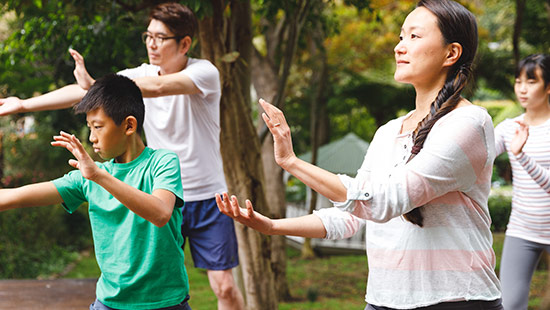
What Is Tai Chi — A Beginner's Guide to the Art and Its Benefits
The history, the five main styles, what happens in a class, and the health evidence — everything a complete beginner needs to understand the practice before stepping into a class.
Read Article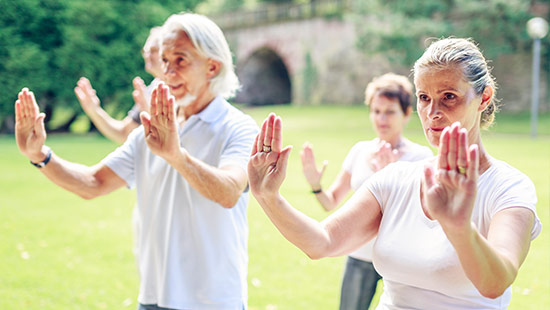
Tai Chi for Seniors in Ireland — Benefits, Classes and Getting Started
The strongest evidence base, the easiest movements to begin with, what to look for in a class, and why tai chi is one of the best investments an older adult can make in their long-term independence.
Read Article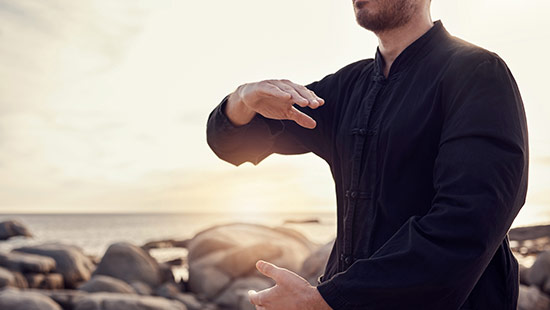
Qigong vs Tai Chi — What Is the Difference and Which Is Right for You
They look almost identical from the outside and share the same ancient roots. But they are distinct disciplines with different purposes and different demands. This guide helps you choose.
Read Article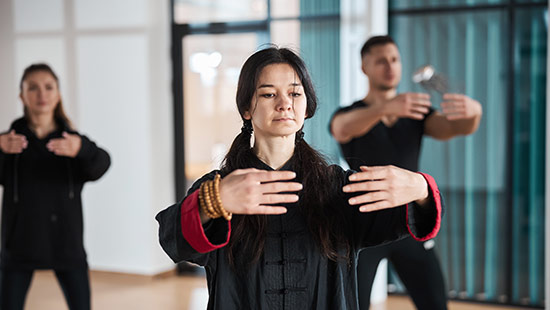
Breathwork and Martial Arts — How Breathing Shapes Performance and Resilience
Breath is the bridge between the physical and mental sides of training — and nowhere is this more explicitly taught than in the tai chi and qigong traditions.
Read ArticleFrequently Asked Questions
Yes. Tai chi is one of the most accessible movement practices available. No prior fitness or martial arts experience is required, it places minimal stress on the joints, and most styles can be adapted for people with limited mobility. Most beginners start with a short introductory form and build from there over several months of regular class attendance.
Tai chi classes in Ireland are available through community centres, leisure centres, dedicated martial arts schools and outdoor groups, particularly in spring and summer. Searching locally via Google, asking in community Facebook groups and checking with Active Retirement Ireland are all reliable ways to find classes in your area. As with any class, visiting before committing and speaking to the teacher about your level and any health considerations is recommended.
Research consistently supports tai chi as an effective intervention for anxiety and stress reduction. The combination of slow movement, regulated breathing and present-moment focus activates the parasympathetic nervous system — the body's rest and recovery state — and reduces cortisol levels with regular practice. Most practitioners report noticeable improvements in stress and sleep quality within six to eight weeks of consistent attendance.
Yoga originates in India and typically involves holding static postures. Tai chi originates in China and is characterised by continuous flowing movement coordinated with breath. Both emphasise mindfulness and have well-documented health benefits, but the physical experience is quite different. Tai chi has a particular strength in balance and fall prevention research that yoga does not match, while yoga has more extensive evidence for flexibility and certain musculoskeletal conditions.
Tai chi is one of the most extensively researched forms of exercise for older adults. Strong evidence supports its benefits for balance, fall prevention, blood pressure, joint health and mental wellbeing. Multiple large-scale reviews of randomised controlled trials have found that regular tai chi practice significantly reduces both the rate of falls and the fear of falling — one of the most meaningful outcomes for older adult independence.
A beginner can learn a short form — typically 8 to 24 movements — within a few months of regular practice. Full command of a longer traditional form takes considerably longer. Most practitioners find that the health benefits begin to appear within six to eight weeks of consistent attendance, well before the form itself feels natural or complete.