Martial arts is one of the most broad and varied categories in physical activity — covering everything from the precise striking of karate to the ground-based problem-solving of Brazilian jiu-jitsu, from the philosophy-driven practice of aikido to the competitive intensity of MMA. Ireland has a strong and growing martial arts scene, with clubs available across every county and styles to suit every age, goal and starting point. This guide covers what is available, what each style is suited to, and — crucially — how to find and evaluate a good club near you.
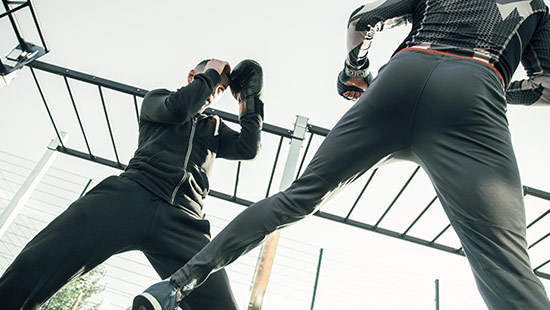
What Martial Arts Actually Is
The term martial arts covers a wide spectrum of practices, but most traditions share a common foundation: structured physical training, progressive skill development, and — in the best schools — a culture that takes the development of the person as seriously as the development of the technique. The physical training ranges from solo practice of forms and kata through to live partner work, sparring and competition. Most martial arts sit somewhere on a spectrum between these two ends, and which point on that spectrum suits you best is one of the first useful questions to ask when choosing where to begin.
Broadly, the main categories are striking arts — which emphasise punching, kicking and impact — grappling arts, which emphasise throws, takedowns and ground control, and mixed or weapons-based systems that combine elements of both. Internal arts like tai chi and aikido sit in their own category, emphasising internal energy, structure and redirection over direct force. Most people who train for long enough end up curious about more than one category, which is one of the things that keeps the practice interesting over years and decades.
The Main Styles Available in Ireland
Karate is the most widely available striking art in Ireland and one of the most structured entry points for beginners. It emphasises punching, kicking and blocking technique, taught through solo practice of kata — choreographed forms — and partner drills. Competitions range from kata performance to contact sparring. Karate Ireland, under IMAC, represents clubs across the country, and the range of styles available — Shotokan, Wado-Ryu, Goju-Ryu, Kyokushin and more — means there is significant variation in character between different clubs even within the same art. An Olympic sport since Tokyo 2020, karate has a well-developed competitive pathway for those who want it alongside its traditional practice.
Brazilian Jiu-Jitsu (BJJ) has grown significantly in Ireland over the last decade and now has a strong presence in most urban centres. It focuses almost entirely on ground fighting — takedowns, positional control and submission holds — and is distinguished by its emphasis on live rolling: every class involves sparring against resisting partners. This makes it one of the most practically effective arts for developing real physical capability under pressure, and also one of the most accessible for beginners regardless of size or athleticism, because leverage and technique consistently overcome strength. BJJ clubs are typically informal in culture, with a flat hierarchy and a strong community dimension.
Judo is Ireland's most established Olympic martial art and has a deep competitive tradition here. It focuses on throwing and takedown techniques, with ground control and submission work as a secondary element. Judo training is physically demanding and develops genuine whole-body strength, balance and explosive power. The Irish Judo Association has affiliated clubs across all provinces, and judo's Olympic status gives it a well-resourced competitive pathway alongside its recreational practice. It is one of the best-structured arts for children as well as adults.
Taekwondo is characterised by its emphasis on high and spinning kick techniques and is one of the most widely practised martial arts in the world. It has a strong competitive and Olympic tradition, and its structure — coloured belt progression, patterns, sparring — makes it particularly popular for children's programmes. Taekwondo clubs are available in most towns and cities across Ireland through both ITF and WTF/WT governing bodies, each with slightly different emphasis in terms of technique and competition format.
Kickboxing is one of the most widely practised martial arts in Ireland and often the first contact sport people try. It combines the punching techniques of boxing with kicks drawn from karate and other striking arts, typically practised with gloves in a stand-up format. The barrier to entry is low — most clubs welcome complete beginners with no prior experience — and the fitness dimension of kickboxing training makes it popular with people who are as interested in conditioning as they are in the martial art itself. IMAC recognises kickboxing in Ireland and clubs are available across the country. For those who want a competitive outlet, Irish kickboxing has a well-established national and international circuit.
Muay Thai — the national sport of Thailand — is a striking art that uses fists, elbows, knees and kicks, making it one of the most complete stand-up fighting systems available. Known as the art of eight limbs, it is distinguished from kickboxing by its use of the clinch — close-range standing grappling — and the devastating power of its knee and elbow techniques. Muay Thai has grown significantly in Ireland over the last decade and now has a strong presence in most cities and many towns. It is widely regarded as one of the most effective striking arts for both self-defence and competitive fighting, and most MMA gyms offer Muay Thai classes as a core part of their curriculum alongside grappling. The training is demanding but the community around Irish Muay Thai is notably welcoming to beginners.
MMA — Mixed Martial Arts combines striking and grappling techniques from multiple disciplines, most commonly boxing, Muay Thai, wrestling and BJJ. It is the format made globally visible by the UFC and has grown rapidly as a recreational training option even for people with no competitive ambitions. Most Irish MMA gyms offer classes in the component arts alongside combined MMA training, making them a good option for people who want broad physical development across multiple disciplines. The profile of Irish MMA internationally — most visibly through Conor McGregor's career and the development of SBG Ireland — has given the domestic scene a strong foundation.
Aikido is a Japanese martial art that emphasises redirection of force, joint locks and throws rather than direct striking. It is non-competitive, places significant emphasis on internal development and the principles of harmony and non-resistance, and is practised as much for its philosophical dimension as its physical one. The connection between aikido and the bushido tradition runs through its founder Morihei Ueshiba, who described the art explicitly as a continuation and transformation of the samurai martial inheritance. It is particularly well-suited to adults who are drawn to the philosophical and internal dimensions of martial arts alongside the physical training.
Kung Fu and Chinese martial arts cover an enormous range of styles under a single broad term — from the fast, acrobatic Wushu forms to the internal arts of Wing Chun and Baguazhang. IMAC represents Wushu in Ireland, and Chinese martial arts clubs exist across the country, often offering a combination of forms practice, partner work and in some cases weapons training. The quality and character of clubs varies more widely in this category than in arts with more standardised governing structures, making the club evaluation process particularly important.
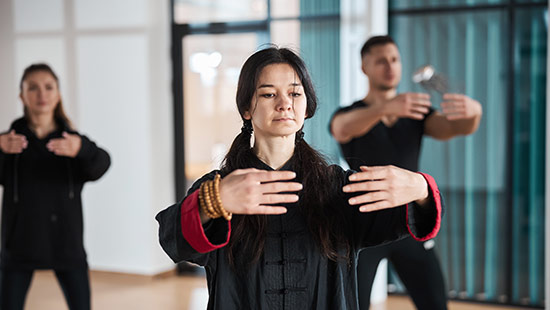
Best Martial Arts for Self-Defence
This is the question most commonly asked by people approaching martial arts for the first time, and it deserves a direct answer rather than a diplomatic one.
The most important dimension of self-defence is rarely physical — as we explored in detail in our article on psychological self-defence. Situational awareness, the ability to de-escalate, the recognition of threat before it becomes physical, and the willingness to walk away — these are the skills that prevent the vast majority of violent situations from developing. But if a situation does become physical, what you have trained matters enormously, and why it matters is worth understanding properly.
Kickboxing and Muay Thai are among the most practical starting points for stand-up self-defence, and the reason comes down to something that is rarely discussed directly: sparring acclimatises the brain to being hit. Most people who are attacked on the street freeze — not because they lack courage, but because someone directing a punch at them is genuinely unknown territory. The brain does not know how to process it, so it stalls. Someone who has sparred regularly, even lightly, has a completely different experience. Their brain has already been in that situation. A punch coming toward them is not new information. They can respond rather than freeze.
This is why even light, controlled sparring is valuable — it does not need to be hard contact to produce the acclimatisation effect. The brain is being trained to function in that environment, and that adaptation transfers directly to any situation where violence is a possibility. Muay Thai in particular, with its use of the clinch and knees at close range, develops comfort in the kind of close, chaotic physical space that real confrontations tend to produce. Kickboxing develops the same stand-up comfort with a slightly lower barrier to entry for complete beginners.
Brazilian Jiu-Jitsu covers a different and equally important dimension. Most street situations, if they go physical and you cannot maintain distance, end up in close contact — where striking is no longer an option and the question becomes how to manage someone who is stronger, heavier or more aggressive than you are. BJJ is specifically built around this problem. The ability to stay calm when someone has entered your personal space, to manage their aggression from the ground or from a clinch, to control rather than panic — these are the things BJJ develops through hundreds of hours of live rolling against resisting partners. It is not a coincidence that BJJ is the art most consistently cited by people who have used martial arts training in a real situation.
A combination of some stand-up striking work — kickboxing or Muay Thai — and BJJ covers the realistic range of physical scenarios most people are ever likely to encounter. You do not need to be good at both. You need to be comfortable enough in both that your brain does not shut down when things get physical.
On the subject of dedicated self-defence courses — Krav Maga and similar systems are sometimes recommended in this context, but a consistent critique from experienced instructors is worth sharing: these systems can over-complicate the response to simple situations. When someone is grabbed or pushed, a person who has been taught a long sequence of specific responses can find their brain cycling through options — move one, no, move two, no — and by the time they have worked through the sequence, the moment has passed. Simplicity under stress is not a limitation; it is the whole point. For most people, a beginner self-defence course at a reputable martial arts school — one with good Google reviews, verified instructor credentials, and a realistic approach to pressure-testing what they teach — is a more useful starting point than a dedicated self-defence system. The foundation skills of a good kickboxing, Muay Thai or BJJ club will serve you better than a course built around memorised sequences.
Martial Arts for Adults — Starting or Returning
One of the most persistent misconceptions about martial arts is that it is primarily for young people or for those who started as children. It is not. Adults begin training at every age and progress steadily with consistent attendance regardless of prior experience. Many of the most dedicated and technically accomplished practitioners in any club started training as adults, often after years of thinking they had left it too late.
What changes with age is not the capacity to learn or develop — both remain intact well into middle age and beyond — but the recovery requirements and the wisdom with which training should be approached. An adult beginner who trains intelligently, warms up properly, communicates with their training partners about their level, and does not feel compelled to go harder than their body is ready for will make steady progress and avoid the injuries that come from ego-driven training.
For adults returning after a break, the muscle memory and body awareness developed in previous training return faster than expected. Most returning practitioners find that three to six months of consistent training brings them back to a functional level, even after years away. The mental familiarity with the training environment — the etiquette, the rhythm of a class, the experience of being a beginner again — is often the bigger adjustment than the physical one.
Martial Arts for Kids
Ireland has a strong provision of children's martial arts classes across most styles, and the research base for the benefits is well established — improved focus, self-regulation, confidence, physical coordination and social skills are consistently reported by parents and documented in studies across karate, judo and taekwondo programmes.
The most important factor in a children's class is the quality and experience of the instructor rather than the style itself. A good children's martial arts instructor understands child development, creates a structured and encouraging environment, teaches discipline without harsh methods, and is safeguarding-trained and garda-vetted. IMAC-affiliated clubs in Ireland meet these standards as a condition of membership.
For children who are drawn to obstacle-based movement and want something with a more playful, less formal structure than traditional martial arts, ninja training is an excellent entry point — many martial arts schools incorporate ninja-style movement training into their children's programmes and it develops many of the same physical and mental qualities in a format children find immediately engaging.
How to Find a Good Martial Arts Club Near You
Finding a club is straightforward. Finding a good club requires a little more care. The name above the door and the style taught tell you almost nothing about the quality of instruction or the culture of the school. These are the steps that consistently produce better outcomes for people trying to find the right club.
Check Google Business Profile reviews. Look for clubs with a sustained pattern of positive reviews over time — not just a cluster of recent ones. Read the negative reviews carefully too. A handful of negative reviews in a long history is normal; a pattern of similar complaints about the same issues is a signal worth taking seriously. Pay particular attention to reviews mentioning how the club handles beginners, children, or people returning from injury.
Ask for recommendations in local community groups. Facebook community groups — local area groups, parents' groups, sports groups — are a genuinely useful source of word-of-mouth recommendations for martial arts clubs in most Irish towns and cities. Ask directly what clubs people have had good experiences with and why. Always cross-reference any recommendation against Google reviews independently — personal recommendations reflect individual experience and may not represent the broader picture of how a club operates.
Visit the club and watch a group class before joining. Any reputable club will welcome a prospective member to watch a regular group session. Watching tells you things that no website or review can: how the instructor manages the group, how experienced students treat beginners, the general atmosphere of the training environment, and whether the culture is one you would feel comfortable in. This applies to group classes — no club would allow you to observe a private session and that is not what you are asking for. If a club is reluctant to let you watch a group class before joining, that reluctance is itself useful information.
Take a free trial if offered, and pay for one class initially. Most good clubs offer a trial class or a first session at no cost. Take it. Beyond the trial, pay for a single class before committing to a monthly membership or a term. The first real session — where you are participating rather than observing — gives you a very different and more complete picture of whether the environment is right for you. Committing to a term before that first real session is rarely necessary and removes your ability to walk away cleanly if the fit is wrong.
Check the instructor's credentials via the club website. A reputable club will have an instructor page or an about section that describes the coach's background — their training lineage, their grade or rank, their competition history if relevant, and their coaching qualifications. In Ireland, look for IMAC affiliation, which confirms garda vetting, first aid certification and completion of IMAC's coach education programme. For children's classes in particular, safeguarding training should be explicitly mentioned. If a club has no information about its instructors online, that absence is worth asking about directly before attending.
Frequently Asked Questions
For most beginners, karate, judo or Brazilian jiu-jitsu offer the clearest structure, the widest availability of clubs across Ireland, and well-established beginner programmes. The best choice depends on whether you are drawn to striking, grappling or a combination of both. Visiting a class before committing is always the most reliable way to find the right fit.
For practical self-defence, Brazilian jiu-jitsu, judo and Muay Thai are among the most widely recommended because they are pressure-tested in live training and develop real physical capability under stress. Krav Maga is also specifically designed for real-world threat scenarios. That said, any martial art practised consistently in a school that includes contact training will develop genuine self-defence capability over time.
Yes. Most martial arts clubs in Ireland welcome adult beginners at any age and any fitness level. Many adults start training in their thirties, forties and beyond and progress steadily with consistent attendance. The most important thing is choosing a school with a structured beginner programme and a culture that supports new students rather than simply throwing them in with experienced practitioners.
Start with Google reviews — look for clubs with a consistent pattern of positive feedback over time. Ask for recommendations in local community Facebook groups but verify any suggestions via Google reviews independently. Visit the club and watch a class before joining, take a free trial if offered, and pay for one class initially before committing to a longer term. Check that instructors are listed on the club website with their qualifications and background.
Look for an instructor who can explain not just what to do but why — the principles behind the technique, not just the technique itself. Check their background on the club website, ask how long they have been teaching, and find out whether they have specific experience with your age group or level. For children's classes, ask directly about safeguarding training and garda vetting. A good instructor welcomes these questions.
Related Articles
Psychological Self-Defence — The Mental Side of Personal Protection
The most dangerous moment in any confrontation is the one before it becomes physical. Awareness, ego management and the decision to walk away are the foundations trained practitioners build first.
Read Article
The Samurai Code — What Bushido Really Was and Why It Still Matters
The real story of bushido is stranger, more contested and considerably more interesting than the version that appears on gym walls and in martial arts manifestos.
Read Article
Iron Body Training — The Shaolin Conditioning Tradition Explained
Iron body training is one of the most misunderstood practices in the martial arts world. This is what it actually involves and how serious practitioners approach it safely over years of work.
Read Article
Ninja Training for Kids — What It Is and Why It Builds Confidence
Ninja training combines obstacle work, movement skills and structured challenge in a format that genuinely engages children — available through dedicated facilities and many martial arts schools across Ireland.
Read Article